Systems Approaches to Regional Sustainability
Islands are systems. We teach students to trace them.
A UBC Integrated Sciences field course taking undergraduates to Iceland, Bermuda, and Hawaiʻi to study how a bounded place — a society, an economy, an ecology — holds together under pressure.
Jump to: The Program · In the Field · Expeditions · Voices · Support the Program
The Program: Why islands.
Islands make systems visible. Bounded coastlines, finite freshwater, single harbours, one fishery, one reef — every decision a society makes about energy, food, tourism, or infrastructure cascades into every other one, and the cascade is short enough to trace.
ISCI 361/461 takes upper-year UBC undergraduates into that visibility. Each year we run two expeditions — drawn from our field locations in Iceland, Bermuda, and Hawaiʻi — studying not the landscapes but the systems that make those places work, and the engineered, governed, contested responses they marshal when those systems are stressed.
The course is organized around the questions students learn to ask of a place.
How many people does it take to run a country?
What does tourism cost the place that hosts it?
When climate shifts a fishery, what else moves with it?
When a volcano threatens a town, what kind of society pumps seawater on the lava?
Whose knowledge counts when we plan a watershed?
What does a region owe its grandchildren?
Systems Thinking in the Field: What it looks like in practice.
Six moments — past and present — that show what the course teaches students to S.E.E.: to see a sustainability challenge through its Social, Economic, and Environmental dimensions simultaneously, and to trace how those dimensions drive each other. Each is a place where a system was stressed, and a society had to decide how to respond.
Reykjanes, Iceland · 2023–25
Berms against a new fissure.
As the Reykjanes peninsula entered a new eruptive phase, engineers built earthen berms around the Blue Lagoon and the Svartsengi geothermal plant — critical infrastructure for both a tourism economy and a regional power supply. Lava arrived. The berms partially held.
A live case study in adaptive infrastructure: how fast can a society engineer protection for an asset it cannot afford to lose?
Höfn, Iceland · ongoing
Plumbing redesigned for moving ground.
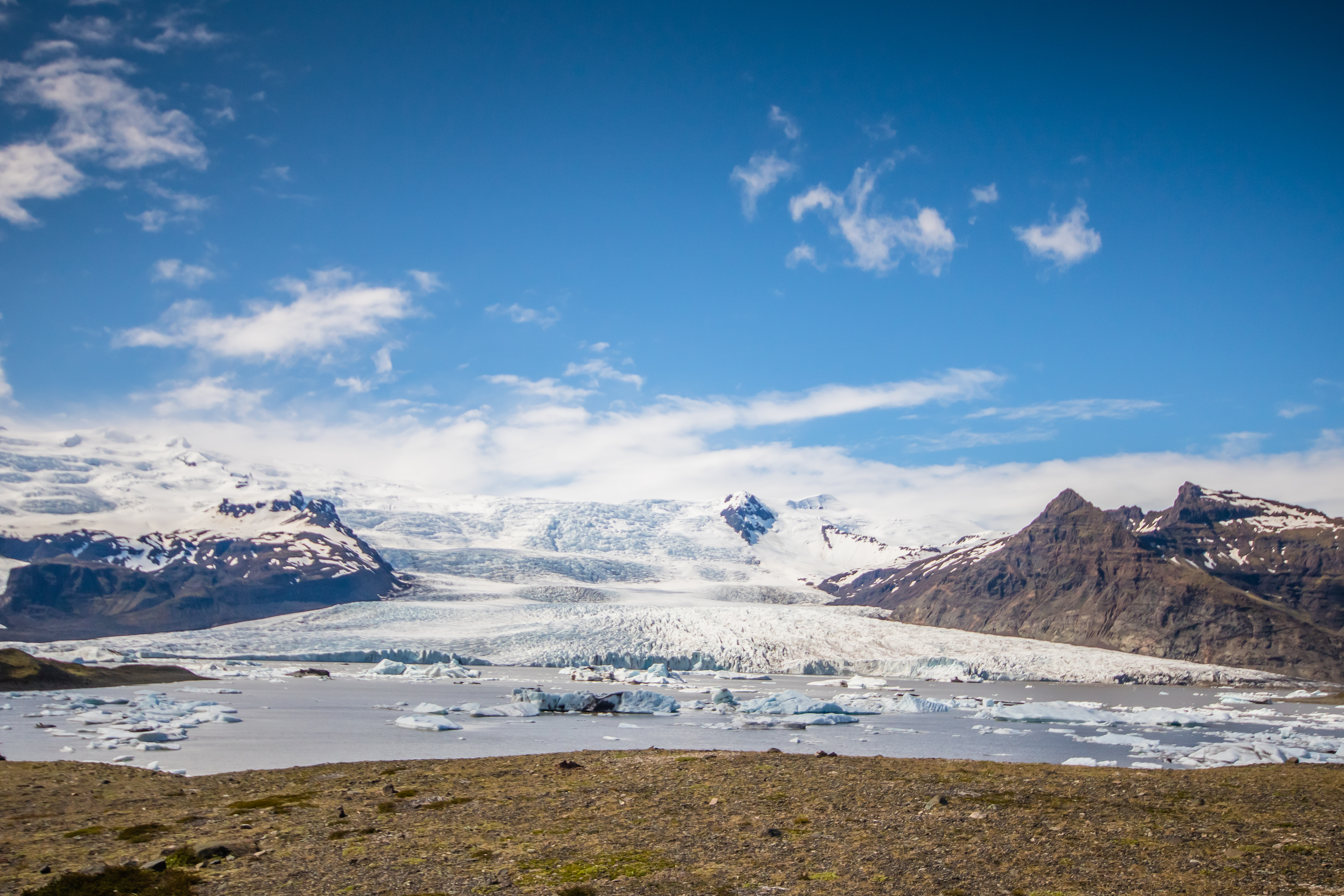
In Höfn, the land is rising as Vatnajökull retreats and the sea is rising at the same time. Water and sewer infrastructure is being relocated, raised, and rebuilt — a town's plumbing redesigned in response to ice melting elsewhere on the same island.
Climate cascades made literal: a glacier's loss reaches a small town through its pipes.
Bermuda
64,000 people running a country.
Bermuda is one of the smallest sovereign-scale jurisdictions on earth. A single freshwater lens, a single reef, a tourism economy underwriting most of the rest. Students study what it takes to hold a country together at that population — which decisions get made by whom, on what timescale, with what data.
The minimum apparatus of a state, visible at a scale you can walk across.
Bermuda · climate & fisheries
When a fishery moves, an economy follows.
Warming water and shifting reef chemistry change which species are present and which are catchable. Students trace those biological signals into Bermuda's fishing fleet, into restaurant menus, into tourism revenue, and into the government's tax base — one cascade, six layers deep.
Climate as input, economy as downstream effect — and the policy levers in between.
Hawaiʻi · 1883–present
A solution that became the problem.
In 1883, mongoose were introduced to sugar cane fields to control rats — a logical fix with a fatal flaw: rats are nocturnal, mongoose are diurnal. They rarely overlap. What the mongoose devastated instead were the populations of ground-nesting birds, including the nēnē, alongside native reptiles and invertebrates. Introduced eucalyptus outcompeted native vegetation and altered fire behaviour across entire slopes.
What does it take for a failed "solution" to persist long after its failure is documented — and who bears the cost of reversing it?
Hawaiʻi · ahupuaʻa
A precolonial systems framework, still operative.
The ahupuaʻa is a method of managing watersheds as integrated mountain-to-sea units, developed over centuries by kanaka maoli. Students work with practitioners restoring fishponds and reef systems within ahupuaʻa boundaries — and learn to trace a working system that long predates the term "systems thinking."
Systems thinking, students learn, is not a Western invention.
This Year's Expeditions: Two expeditions running in 2026.
ISCI 361/461 runs two field expeditions each year. Our field locations include Iceland, Bermuda, and Hawaiʻi — all three are detailed below.
Iceland

April 28 - May 10, 2026
Reykjanes, Höfn, and the volcanic south. Glacial systems, geothermal grids, carbon mineralization, and a country rebuilding infrastructure around moving ground.
Bermuda
 February 14 – February 21, 2026
A complete island system at a walkable scale — 64,000 people, one reef, one freshwater lens, an economy with a single dominant input. Students meet the people running it.
Iceland: A country planning for ground that will not stay still.
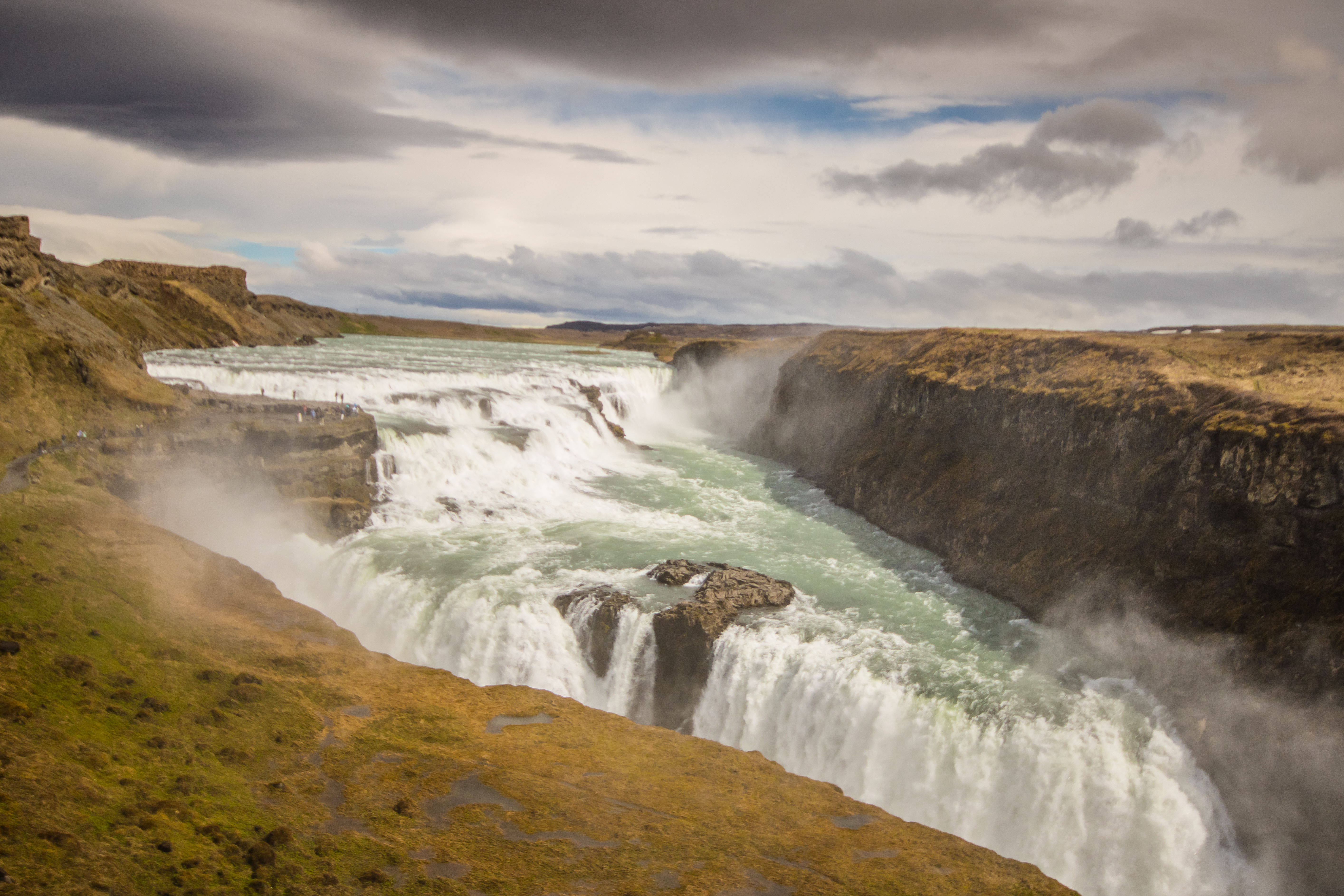
Iceland makes the contract between a society and its planet legible. Students study geothermal energy systems, post-glacial rebound, glacial retreat, and the engineered responses to recent eruptions — the Blue Lagoon berms of 2023–25, Heimaey's harbour saved by seawater pumped onto lava, Höfn rebuilding its water and sewer infrastructure as the land itself moves. They also study Iceland's response to the climate crisis itself: at Hellisheiði, captured carbon emissions from geothermal industry are injected back into the basalt bedrock, where they mineralize — returning the emissions to the earth that generated the heat. Students learn how a country of 380,000 plans for a future of restless ground, and how civic decision-making, energy policy, and geological time meet in the same room.
What students ask
- What kind of society pumps seawater onto a lava flow?
- Can a country run on the heat of its own crust?
- When the land lifts and the sea rises, who pays to move the pipes?
- What does a glacier owe the grid?
An amazing opportunity to learn about the culture, history, and geology. Unlike typical lecture courses, I feel the information learned stuck a lot better than in traditional courses, as that real-life application was very evident and helpful in understanding concepts.
— Student feedback, 2024 cohorT
Bermuda: A complete system, small enough to see all at once.
64,000 people. One freshwater lens. A single reef. A tourism economy underwriting most of what happens above water. Students work alongside Bermudian scientists, ministers, and fishers to trace how a decision about coastal development cascades into reef health, into fisheries, into livelihoods, into the tax base. They study the minimum apparatus of a state — and watch, in real time, how a country of this size makes consequential calls about climate, water, and the economy that funds both.
What students ask
- How many people does it take to run a country?
- Can one bleaching event take down the whole economy?
- If your drinking water falls from the sky onto your roof, what does a dry month cost you?
- What does it feel like to be making national climate decisions for a country you can bicycle across in an afternoon?
This class has been one of the highlights of my undergraduate experience at UBC. The field studies course is so valuable — it allows you to understand what you are learning given the context of a specific situation, which makes it easier to understand both why this is important and how to translate these lessons into your daily life.
— Student feedback, 2024 cohort
Hawaiʻi: Living systems on living land.
Students learn from kanaka maoli scientists and practitioners about the ahupuaʻa framework — a centuries-old method of managing watersheds as integrated mountain-to-sea systems — and study its present-day practice in fishpond restoration and reef stewardship. Alongside that, they examine a contemporary state navigating tourism, agricultural sovereignty, volcanism, and the long consequences of introduced species and land use change. The course teaches students to hold multiple knowledge traditions at once, and to recognize that systems thinking is not a Western invention.
What students ask
- Whose knowledge counts when we plan a watershed?
- What is a tourism economy doing to the place it sells?
- Can a fishpond, restored, feed a future?
- What does sovereignty look like in a system?
The things you learn by interacting with the local Hawaiian people will stick with you forever. The course is super hands-on, which makes learning and understanding concepts stick so much more than anything I could learn in a lecture hall.
— Student feedback, 2024 cohort
The People Behind ISCI 361/461: Three scientists and an exceptional program administrator.
Dr. Lee Groat
Professor of Geology · UBC EOAS
Lee is a Professor of Geology in UBC's Earth, Ocean and Atmospheric Sciences, and has directed the Integrated Sciences program since 2007. His research centres on gem deposit mineralogy and rare earth geochemistry. Fellow of the Mineralogical Society of America and Killam Teaching Prize recipient.
[ photo to come ]
Dr. Steve Quane
Volcanologist · Quest University Canada
Steve is a volcanologist whose research maps the surfaces, flows, and hazard histories of young volcanic landscapes using aerial imaging and bathymetric survey. His fieldwork spans Iceland and western Canada, and he co-founded the Sea to Sky Fire and Ice Geopark.
[ photo to come ]
Dr. Denise Gabriel
Lecturer · UBC Integrated Sciences
Denise is a Killam Teaching Award–winning Lecturer in UBC's Integrated Sciences, where she designs curricula at the intersection of systems thinking and sustainability science. She co-developed the S.E.E. Framework and is extending systems-thinking education to secondary schools through a collaboration with the IB programme. Her research background is in primatology and behavioural ecology.
[ photo to come ]
Mary Anne Lyons
Program Administrator
Mary Anne coordinates every dimension of the field expeditions — student onboarding, logistics, site relationships, and the thousand moving parts that make two international field courses run seamlessly each year.
Student Voices
This course is immersive, intense, visually stunning, interdisciplinary and FUN. I had the best time and will take the life and science lessons with me everywhere I go for the rest of my life.
Student feedback · 2025 cohort
This was the most immersive learning experience of my university life thus far. It was incredible the amount of resources and learning styles this trip accommodated. I felt completely engaged the whole time as the instructors made the already beautiful landscape even more interesting.
Student feedback · 2025 cohort
The course allowed me to learn so much about interconnected systems and I saw how all aspects of sustainability work together. I will definitely be able to apply these concepts to other topics.
Student feedback · 2025 cohort
This course is experiential learning at its finest. The concepts resonated more deeply with me because I was able to learn about them outside of the classroom, and I really appreciated how equally balanced the activities were between the three dimensions of sustainability.
Student feedback · 2023 cohort
You truly get to see real-life applications with your own eyes that make the concepts stick. The course has something to offer for everyone and does an amazing job at covering so many different aspects of a place.
Student feedback · 2024 cohort
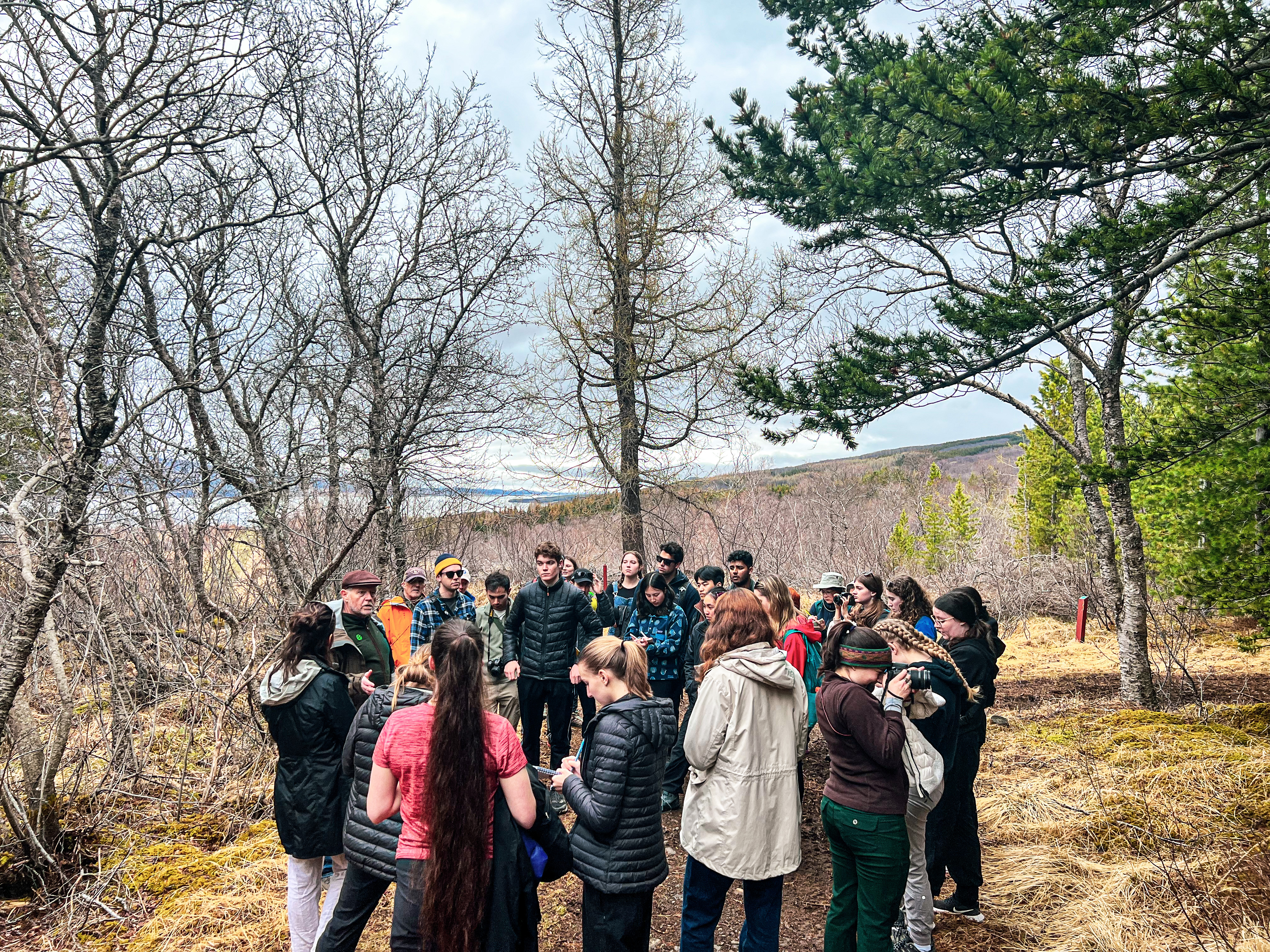
From the Field: Photographs from recent expeditions.



Support the Program: Help send the next student into the field.
Field courses like this are transformative — and expensive. Gifts to ISCI 361/461 fund travel subsidies for students who couldn't otherwise afford to come, field equipment, and stipends for the local scientists, practitioners, and community members who teach alongside us at every site. Every dollar widens who gets to be in the room when the questions are asked.
$2,500 covers one student's travel and accommodation for a full Iceland expedition.
For major gifts or planned giving, contact the UBC Faculty of Science Development Office at development@science.ubc.ca.
Jump to:The Program · In the Field · Expeditions · Voices · Support the Program
Contact